



Nav1.3
NaV1.3, encoded by SCN3A, is a voltage-gated sodium channel that mediates neuronal excitability through action-potential generation and conduction[1]. Mechanistically, NaV1.3 produces fast-activating and fast-inactivating currents, with rapid recovery from inactivation and slow closed-state inactivation, supporting repeated neuronal firing[2]. In disease models, SCN3A mutations are linked to neuronal hyperexcitability and epilepsy, while pathogenic NaV1.3 variants show increased persistent current in neurodevelopmental channelopathy[1][3][4]. Compared with related isoforms, NaV1.3 is strongly associated with fetal brain expression and low normal adult brain expression, making developmental context central to experimental design[1]. In neuropathic pain models, NaV1.3 expression increases after injury, although antisense reduction did not attenuate mechanical or cold allodynia in one rat study[5]. For pharmacological research, human NaV1.3/β1/β2 structures with bulleyaconitine A and the selective antagonist ICA-121431 provide structural references for inhibitor-binding studies[6].
References:
- [1]. Liao S, et al. Structure and Function of Sodium Channel Nav1.3 in Neurological Disorders. Cell Mol Neurobiol. 2023 Mar;43(2):575-584. [Content Brief]
- [2]. Cummins TR, et al. Nav1.3 sodium channels: rapid repriming and slow closed-state inactivation display quantitative differences after expression in a mammalian cell line and in spinal sensory neurons. J Neurosci. 2001 Aug 15;21(16):5952-61. [Content Brief]
- [3]. Zaman T, et al. Mutations in SCN3A cause early infantile epileptic encephalopathy. Ann Neurol. 2018 Apr;83(4):703-717. [Content Brief]
- [4]. Smith RS, et al. Sodium Channel SCN3A (NaV 1.3) Regulation of Human Cerebral Cortical Folding and Oral Motor Development. Neuron. 2018 Sep 5;99(5):905-913.e7. [Content Brief]
- [5]. Lindia JA, et al. Relationship between sodium channel NaV1.3 expression and neuropathic pain behavior in rats. Pain. 2005 Sep;117(1-2):145-53. [Content Brief]
- [6]. Li X, et al. Structural basis for modulation of human NaV 1.3 by clinical drug and selective antagonist. Nat Commun. 2022 Mar 11;13(1):1286. [Content Brief]
-
Nav1.3 Related Products (17)
Related Products (17)

- 1
-
ICA-121431
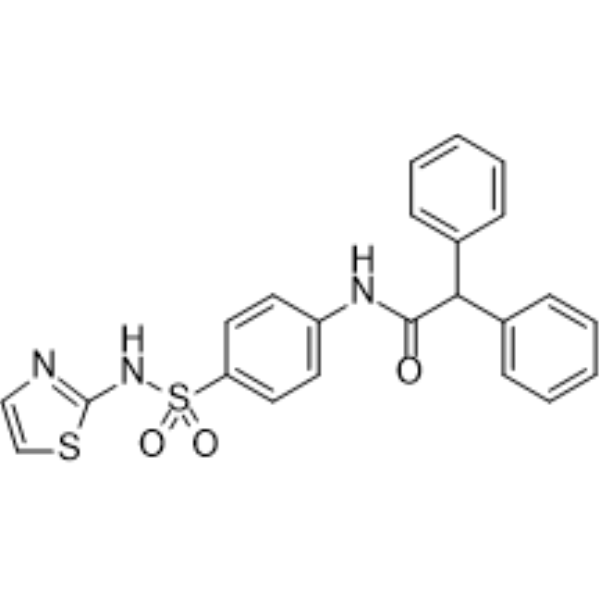 0 ImagesICA-121431 is a nanomolar potent and broad-spectrum voltage-gated sodium channel (Nav) blocker, shows equipotent selectivity for human Nav1.1 and Nav1.3 subtypes with IC50 values of 13 nM and 23 nM, respectively. ICA-121431 shows less potent inhibition of Nav1.2 (IC50=240 nM) and 1,000 fold selectivity against Nav1.4, Nav1.6, and the TTX-resistant human Nav1.5 and Nav1.8 channels (IC50s >10 μM).
-
PF-06456384 trihydrochloride
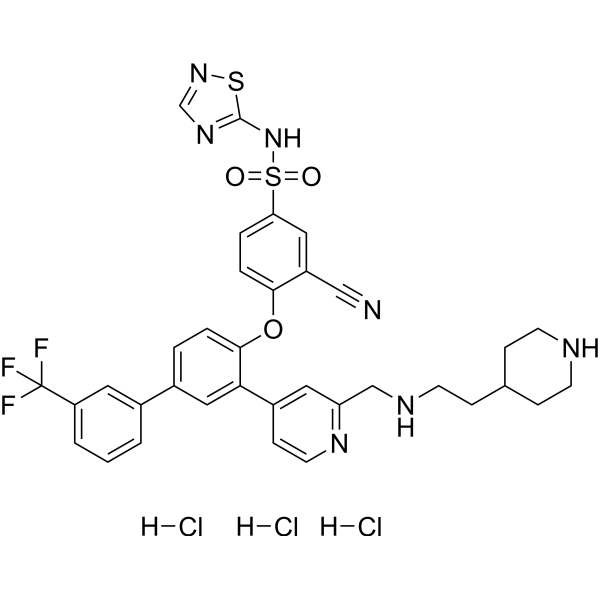 0 ImagesPF-06456384 trihydrochloride is an extremely potent and selective Nav1.7 sodium channel blocker (IC50: 0.01 nM for hNaV1.7; 75 nM for rNaV1.7; <0.1 nM for mNaV1.7). PF-06456384 trihydrochloride shows no significant analgesic efficacy in the mouse Formalin pain model.
-
TC-N 1752
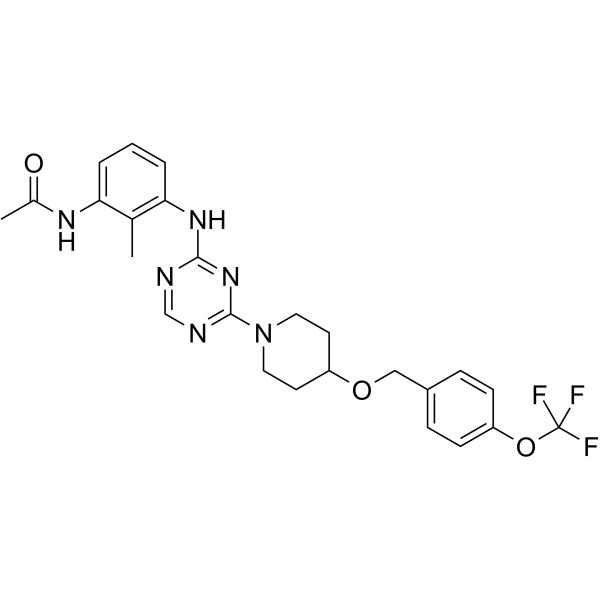 0 ImagesTC-N 1752 is a potent and orally active inhibitor of Nav1.7, with IC50s of 0.17 μM, 0.3 μM, 0.4 μM, 1.1 μM and 2.2 μM at hNav1.7, hNav1.3, hNav1.4, hNaV1.5 and rNav1.8, respectively. TC-N 1752 also inhibits tetrodotoxin-sensitive sodium channels. TC-N 1752 shows analgesic efficacy in the Formalin model of pain.
-
3'-Methoxydaidzein
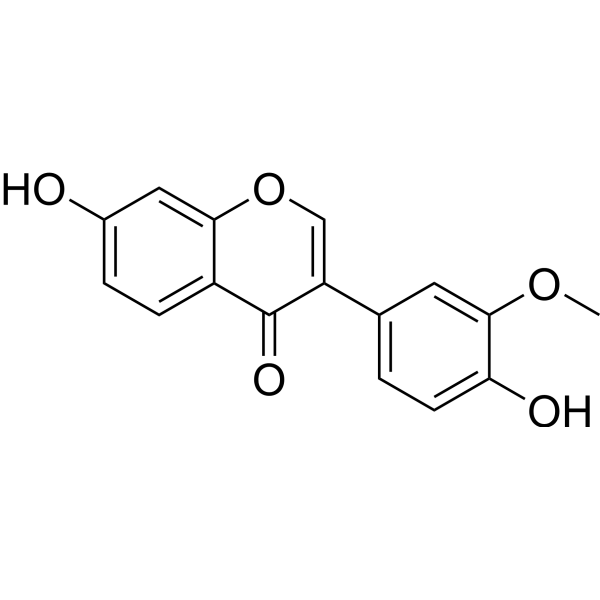 0 Images3'-Methoxydaidzein is a isoflavone and a Sodium Channel inhibitor. 3'-Methoxydaidzein inhibits subtypes NaV1.7, NaV1.8 and NaV1.3 with IC50 of 181 nM, 397 nM, and 505 nM, respectively. 3'-Methoxydaidzein exerts analgesic activity by inhibiting voltage-gated sodium channels.
-
Huwentoxin-IV TFA
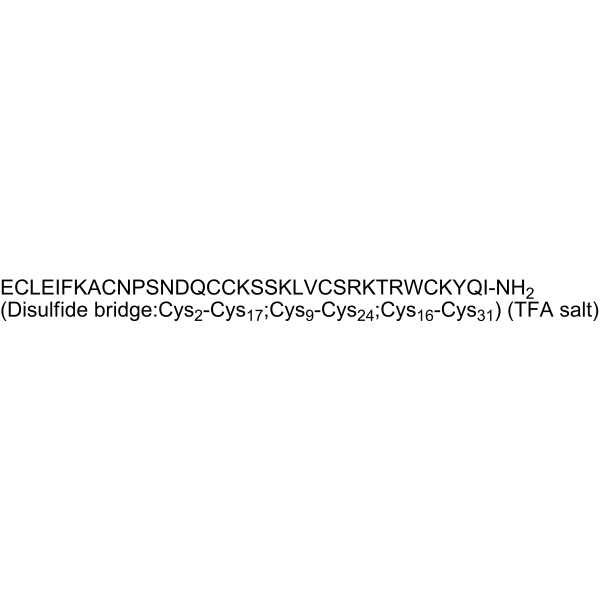 0 ImagesCat. No.: HY-P1220APurity: 99.18%Huwentoxin-IV TFA is a potent and selective sodium channel blocker, inhibits neuronal Nav1.7, Nav1.2, Nav1.3 and Nav1.4 with IC50s of 26, 150, 338 and 400 nM, respectively. Huwentoxin-IV TFA preferentially blocks peripheral nerve subtype Nav1.7 by binding neurotoxin receptor site 4. Huwentoxin-IV TFA has analgesic effects on animal models of inflammatory and neuropathic pain.
-
Nav1.7-IN-23
 0 ImagesCat. No.: HY-189066CAS No.: 3138159-82-4Nav1.7-IN-23 is an orally active, selective NaV1.7 inhibitor. Nav1.7-IN-23 exhibits electrophysiological regulatory effects in mouse dorsal root ganglion neurons. Nav1.7-IN-23 can be used for the research of acute pain, chronic inflammatory pain and neuropathic pain.
-
PF-06526290
 0 ImagesCat. No.: HY-126007PF-06526290 is a voltage-gated sodium (Nav) channel modulator with dual activity of enhancing and inhibiting Nav channel conduction. PF-06526290 slows inactivation by binding to the resting state of Nav channels, and exerts inactivation state-dependent inhibition after prolonged depolarization by acting on the voltage sensor of the fourth homologous domain 4 (D4 VSD). PF-06526290 can be used in research on neurological disorders such as epilepsy and autism.
-
(3β)-Allopregnanolone sulfate sodium
 0 Images(3β)-Allopregnanolone sulfate sodium is a Nav1.3 α-subunit inhibitor (IC50: 75 μM for Nav1.3 + β1; 26 μM for Nav1.3 + β3). (3β)-Allopregnanolone sulfate sodium is involved in the analgesic mechanism of Allopregnanolone. (3β)-Allopregnanolone sulfate (sodium) can be used in the research of neuropathic pain.
-
GpTx-1 TFA
 0 ImagesCat. No.: HY-P1681APurity: 99.56%GpTx-1 TFA is a peptide-based NaV1.7 sodium channel antagonist isolated from the venom of the Chilean spider Grammostola porter. GpTx-1 TFA demonstrates potent inhibitory activity against the NaV1.7 channel with an IC50 value of 10 nM, while exhibiting excellent selectivity for NaV1.4 (IC50 = 0.301 μM) and NaV1.5 (IC50 = 4.20 μM), showing >20-fold and >950-fold selectivity respectively.
-
Phrixotoxin 3
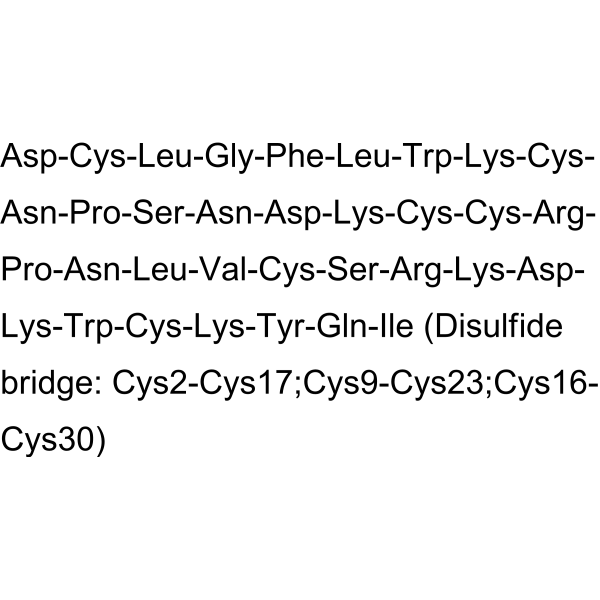 0 ImagesCat. No.: HY-P1218CAS No.: 880886-00-0Phrixotoxin 3 is a potent blocker of voltage-gated sodium channels, with IC50s of 0.6, 42, 72, 288, 610 nM for NaV1.2, NaV1.3, NaV1.4, NaV1.1 and NaV1.5, respectively. Phrixotoxin 3 modulates voltage-gated sodium channels with properties similar to those of typical gating-modifier toxins, both by causing a depolarizing shift in gating kinetics and by blocking the inward component of the sodium current.
-
Pterinotoxin-1
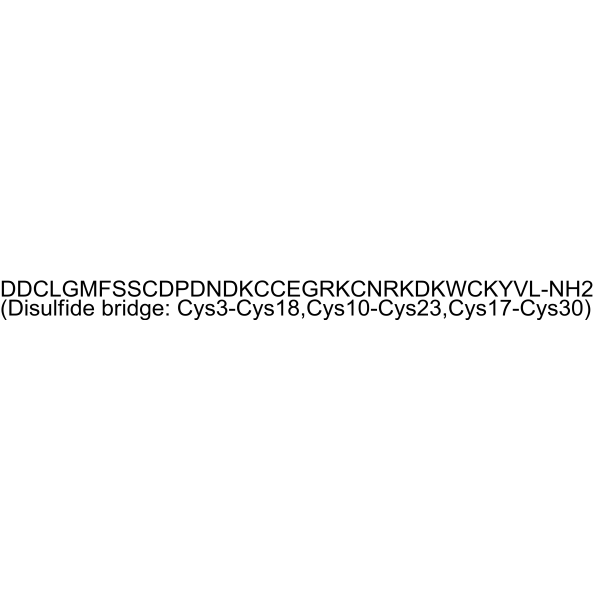 0 ImagesCat. No.: HY-P5943Pterinotoxin-1 is a sodium channel inhibitor peptide toxin.
-
Hm1a
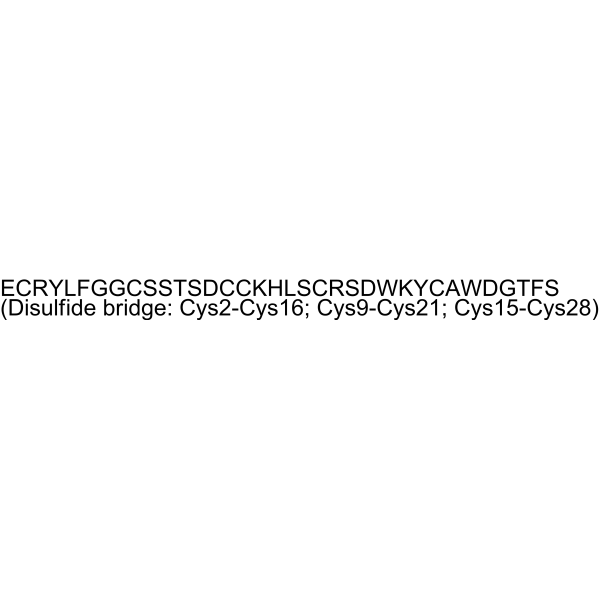 0 ImagesCat. No.: HY-P5183Hm1a is a venom peptide and a selective hNaV1.1 activator with an EC50 of 7.5 nM. Hm1a enhances hNaV1.1 and hNaV1.3 channel currents via delayed inactivation. Hm1a restores action potential firing in Dravet syndrome GABAergic inhibitory interneurons, reduces interictal epileptiform discharges and whole-brain hyperexcitability, lowers seizure frequency, and rescues premature death in Dravet syndrome mice. Hm1a can be used for the research of neurological disease, such as Dravet syndrome.
-
Pterinotoxin-2
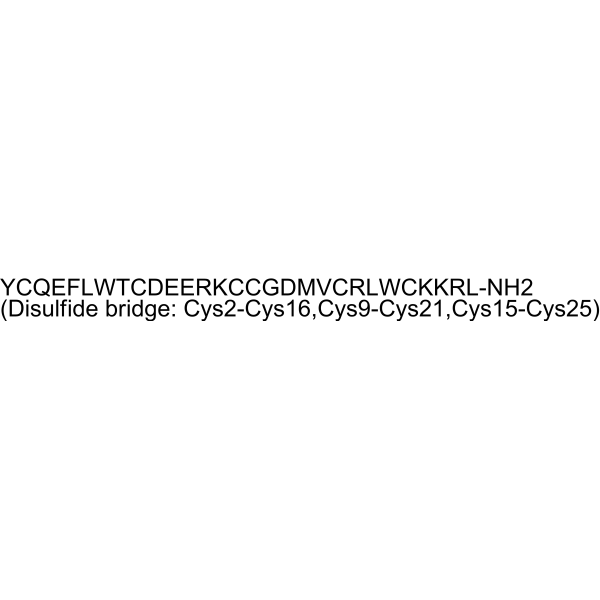 0 ImagesCat. No.: HY-P5942Pterinotoxin-2 is a sodium channel inhibitor peptide toxin.
-
GpTx-1
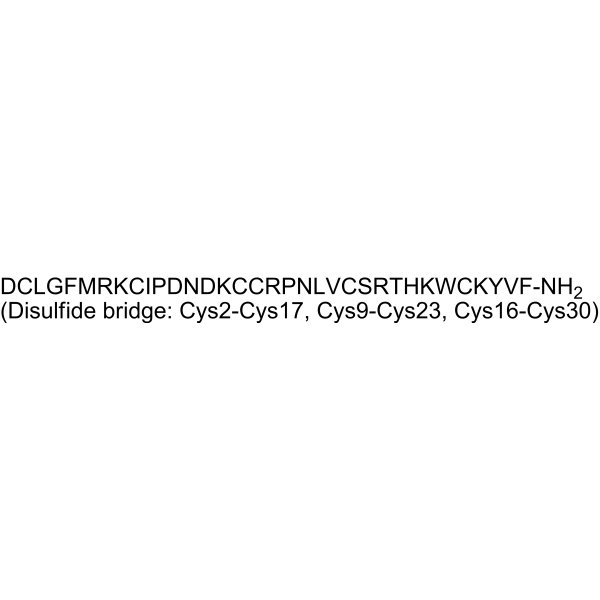 0 ImagesCat. No.: HY-P1681CAS No.: 1661050-12-9GpTx-1 is a peptide-based NaV1.7 sodium channel antagonist isolated from the venom of the Chilean spider Grammostola porter. GpTx-1 demonstrates potent inhibitory activity against the NaV1.7 channel with an IC50 value of 10 nM, while exhibiting excellent selectivity for NaV1.4 (IC50 = 0.301 μM) and NaV1.5 (IC50 = 4.20 μM), showing >20-fold and >950-fold selectivity respectively.
-
Hainantoxin-III
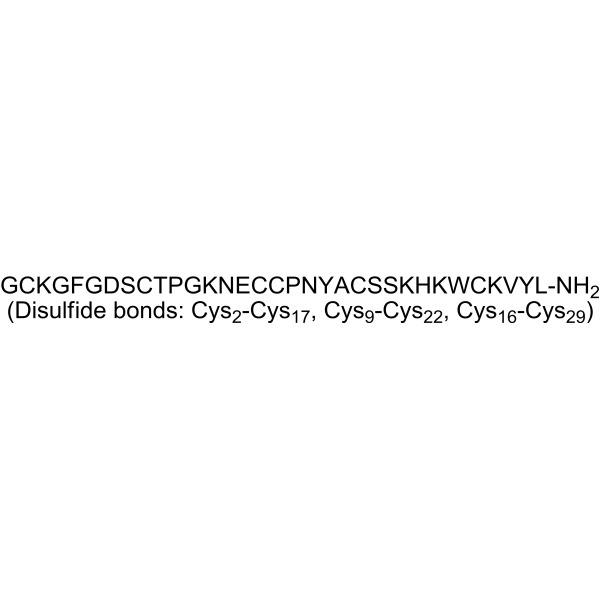 0 ImagesCat. No.: HY-P5180CAS No.: 1809149-40-3Jingzhaotoxin-V is a peptide that inhibits potassium currents in Xenopus laevis oocytes with an IC50 value of 604.2 nM. Jingzhaotoxin-V also inhibits tetrodotoxin-resistant and tetrodotoxin-sensitive sodium currents in rat dorsal root ganglion neurons with IC50 values of 27.6 and 30.2 nM, respectively.
-
Huwentoxin-IV
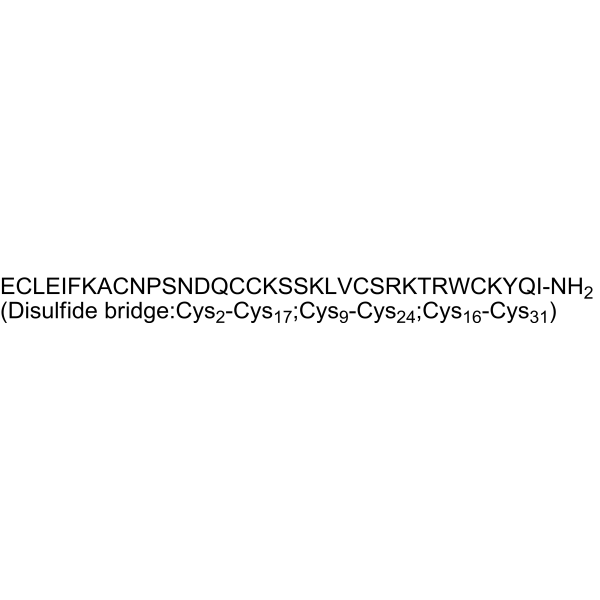 0 ImagesCat. No.: HY-P1220CAS No.: 526224-73-7Huwentoxin-IV is a potent and selective sodium channel blocker, inhibits neuronal Nav1.7, Nav1.2, Nav1.3 and Nav1.4 with IC50s of 26, 150, 338 and 400 nM, respectively. Huwentoxin-IV preferentially blocks peripheral nerve subtype Nav1.7 by binding neurotoxin receptor site 4. Huwentoxin-IV has analgesic effects on animal models of inflammatory and neuropathic pain.
-
Scorpion toxin Tf2
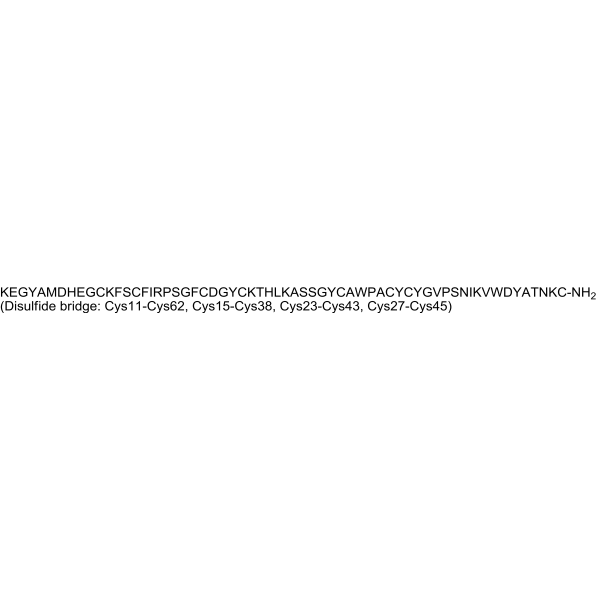 0 ImagesCat. No.: HY-P5152Scorpion toxin Tf2 is a selective human voltage-gated sodium channel Nav1.3 (hNav1.3) activator. Scorpion toxin Tf2 selectively shifts the channel's activation voltage to more negative values, enabling channel opening at resting membrane potentials. Scorpion toxin Tf2 can be used for the research of epilepsy, nociception (after spinal cord injury).
- 1



